

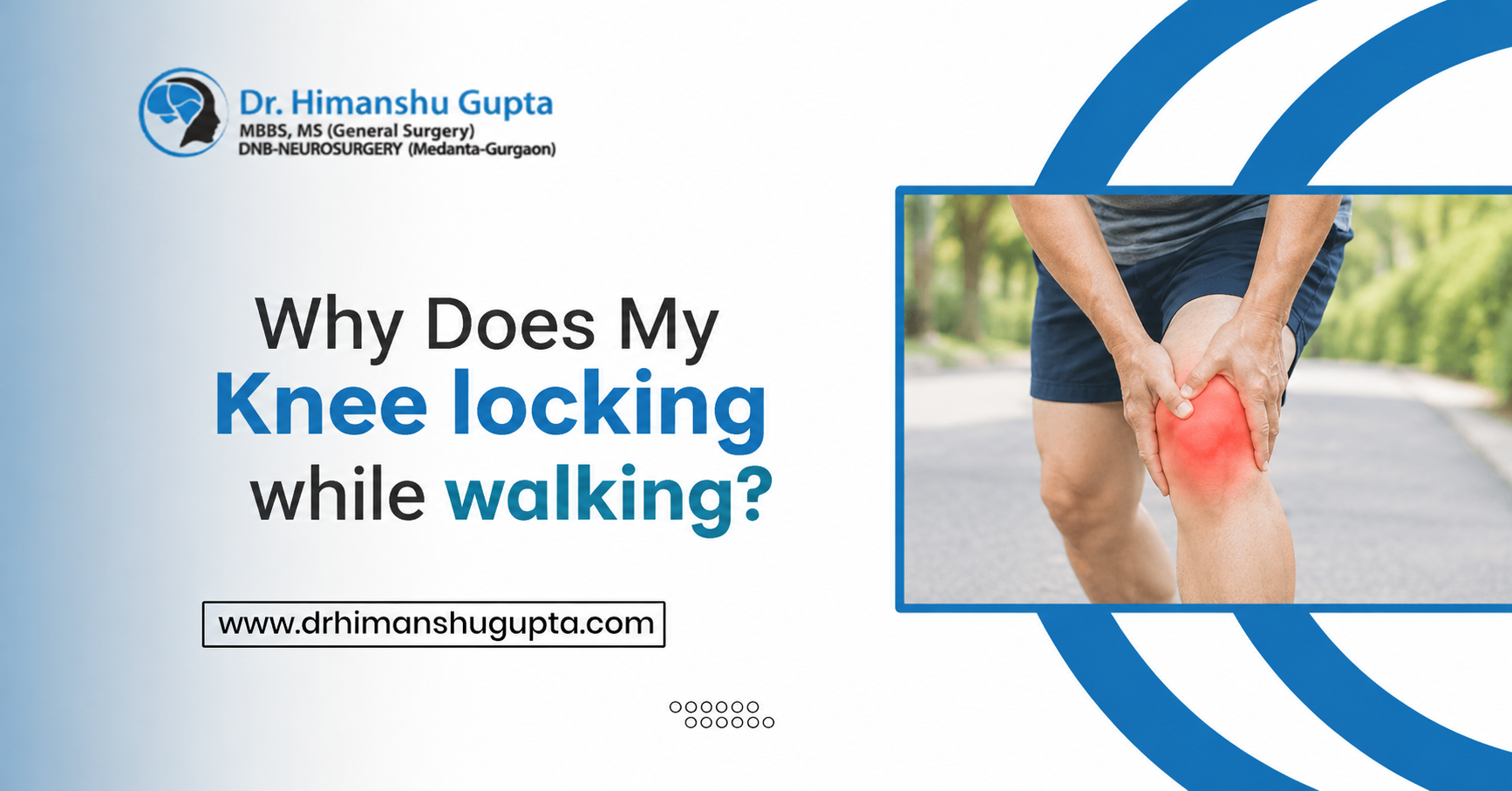
Why Does My Knee locking while walking?
You are walking at a normal pace and the knee suddenly gets stuck. It may stay that way for a few seconds, or you may have to shake the leg gently before it moves again. Knee locking while walking should not be brushed aside, because the joint almost always has a reason for it. Sometimes the cause is minor. Sometimes something inside the knee is physically blocking movement.
What Does Knee Locking While Walking Feel Like?
Most people say the knee feels jammed halfway through a step. You may not be able to straighten it fully, or bend it fully, for a short time. Some also notice clicking, swelling, sharp pain on one side of the knee, or a feeling that the leg may give way. These knee locking symptoms overlap with other knee pain symptoms, so the pattern you notice matters when a doctor examines you.
True Locking and Pseudo Locking
Doctors usually divide this problem into two types.
True locking means something inside the joint blocks movement, such as a torn piece of cartilage or a loose fragment. The knee cannot straighten fully until the blockage moves out of the way.
Pseudo locking means the joint itself can move, but pain or muscle spasm stops it. The muscles tighten to protect the knee, and it feels stuck.
Causes of Knee Locking While Walking
Meniscus tear. The meniscus is a C-shaped cushion between the thigh bone and shin bone. A twisting injury, or slow wear with age, can tear it. A torn piece can slip into the joint and catch. This is one of the most common reasons for a knee that gets stuck while walking.
Loose bodies. Small fragments of bone or cartilage can break off and float inside the joint. When one lands between the bones, sudden knee locking follows, and it usually hurts.
Ligament injury. A sudden stop or twist can damage a ligament. The knee then feels unstable and may catch or buckle.
Arthritis. Worn cartilage makes the joint surface rough and uneven. Stiffness, swelling, and bone changes can all cause knee joint locking, especially in people above 50.
Plica syndrome and kneecap tracking problems. An irritated fold of joint lining, or a kneecap that does not glide properly, can cause painful catching on stairs or while turning.
Muscle spasm. Strong pain from any of the above can trigger a spasm, which leads to pseudo locking.
What to Do When Your Knee Locks
- Stop walking and sit down or hold something steady.
- Do not force the knee straight. Forcing it can make a torn cartilage piece or loose fragment do more damage.
- Let the knee settle, then move it gently within the pain-free range.
- Use a cold pack for 15 to 20 minutes if there is pain or swelling. Our guide on the fastest way to relieve knee pain covers simple home measures.
- Book an examination if it happens again.
How Doctors Find the Cause
The doctor asks when the locking happens, whether there was an injury, and whether swelling follows. Then the knee is examined and you are asked to walk. An X-ray shows bone changes and loose fragments. An MRI shows the meniscus, ligaments, and cartilage clearly. Treatment depends on what these show.
Treatment Options
Treatment for knee locking while walking depends on the cause. Pseudo locking and mild tears often settle with rest, ice, pain relief medicines, and physiotherapy to strengthen the thigh muscles. True locking from a torn meniscus or a loose fragment usually needs keyhole surgery (arthroscopy), where the fragment is repaired or removed through small cuts.
When arthritis is the reason, the plan depends on how much cartilage is left. Medicines, injections, and exercise help in the early stage. If only one part of the knee is damaged, partial knee replacement may be an option. When the whole joint is badly worn, knee replacement surgery in Jaipur can remove pain and the locking that comes with it. Many patients are afraid of surgery because of what they have heard, so it helps to look at the myths and facts about knee replacement and the benefits of knee replacement before deciding. Patients who go ahead can check the usual knee replacement recovery time and the best sleeping positions after knee replacement to plan the first weeks.
When to See a Doctor
Get your knee checked if knee locking while walking keeps coming back, lasts more than a few days, or stops you from walking normally. Go sooner if you have severe pain, swelling, difficulty putting weight on the leg, or the knee gives way. Early treatment protects the cartilage and often avoids bigger surgery later.
Consult Dr. Rohan Jain in Jaipur
Dr. Rohan Jain is an orthopedic and joint replacement surgeon with MBBS, MS (Ortho), DNB (Ortho), FJRS, and FIMS qualifications. He won the gold medal in MS Orthopaedics in 2015 and has more than 12 years of experience. He has treated over 10,000 patients and performed around 2,000 surgeries, covering knee and hip replacement, arthroscopy, sports injuries, and complex fractures. Patients with knee locking while walking can meet him for a proper diagnosis and a treatment plan that suits their knee. You can read more about the knee replacement surgeon in Jaipur and his approach to treatment.
FAQs
1. How to fix knee locking when walking?
The fix depends on the cause. Pain-related locking often settles with rest, a cold pack, pain relief medicines, and physiotherapy to strengthen the thigh muscles. If a torn meniscus or a loose fragment is blocking the joint, keyhole surgery (arthroscopy) is usually needed to repair or remove it. An X-ray or MRI helps the doctor choose the right treatment.
2. Can locked knees be corrected?
Yes, in most cases. Mild tears and spasm-related locking improve with rest and physiotherapy. A true mechanical lock from a torn cartilage piece or loose body is usually corrected with arthroscopy. If advanced arthritis is the reason, partial or total knee replacement can remove the pain and the locking.
3. How can I unlock my locked knee?
Stop walking, sit down, and let the muscles relax. Do not force the knee straight, because forcing can push a torn piece deeper and damage the cartilage. Once the pain eases, move the knee gently within a comfortable range. A cold pack for 15 to 20 minutes helps with swelling. If the knee stays stuck or the locking repeats, see an orthopedic doctor.
4. Can you still walk with a locked knee?
Sometimes a person can walk with a stiff, partly bent knee, but it is not safe to keep doing so. Walking on a blocked joint can damage the cartilage further and increase the risk of a fall. Rest the leg and get it examined soon, especially if you cannot put weight on it or the knee gives way.
5. Why did my knee suddenly lock?
Sudden knee locking is commonly linked to a meniscus tear, a loose piece of bone or cartilage inside the joint, or a ligament injury after a twist. Arthritis, plica syndrome, and kneecap tracking problems can also cause it. Severe pain can trigger a muscle spasm that makes the knee feel stuck even when nothing is blocking the joint.


