

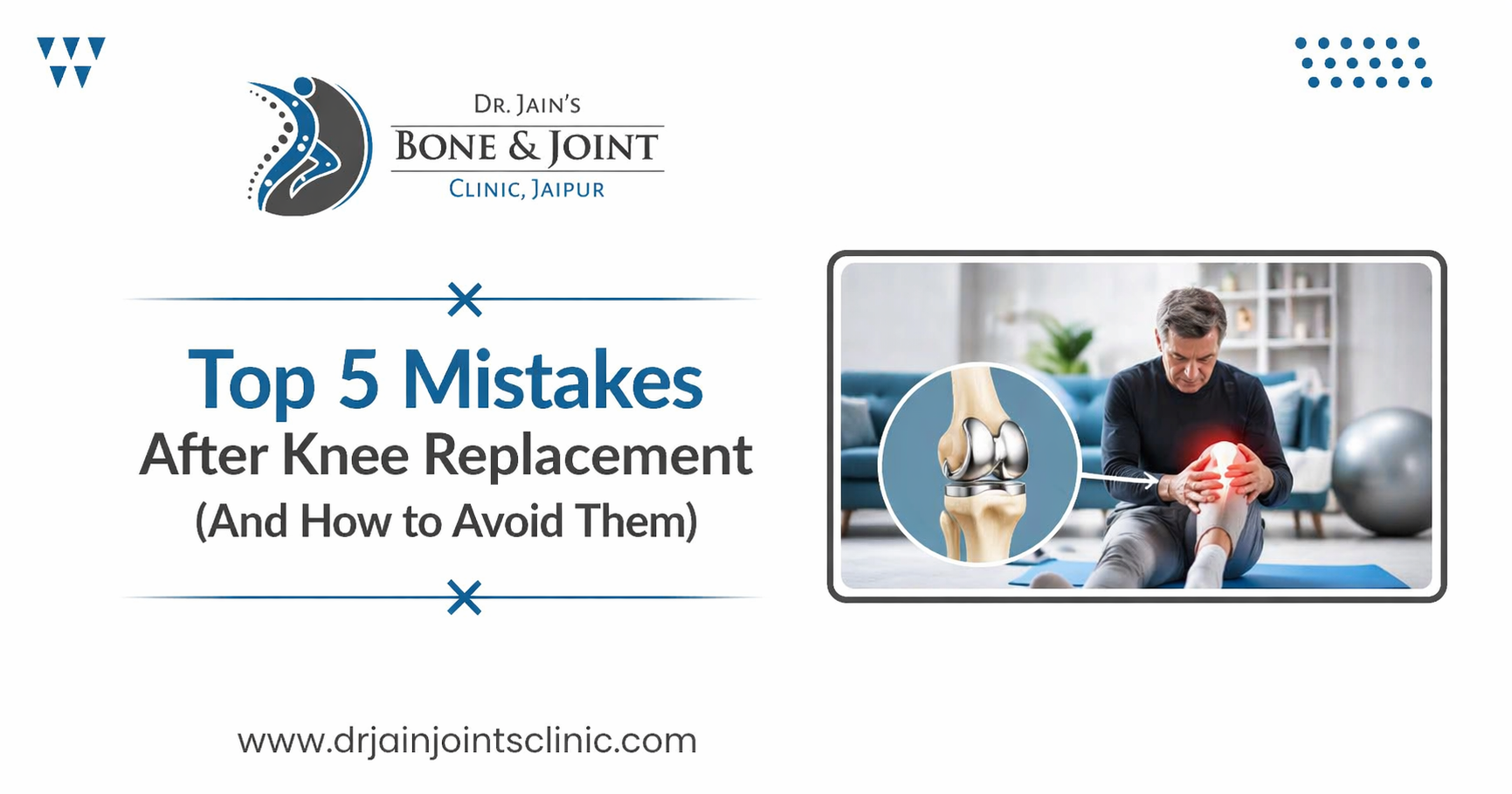
Top 5 mistakes after knee replacement
Introduction
We all know that these days, knee pain is turning out to be very common, and this leads to the need for surgery. Not to be forgotten that knee replacement surgery is a life-changing type of treatment, as it helps individuals to get back on their feet and free themselves from chronic pain. However, the results of your surgery will largely rely on what you do in recovery. Knowing the mistakes that come down the line after knee replacement will enable you to sidestep them and achieve the very best results. The ultimate guide to avoid the 5 biggest mistakes after knee replacement patients make in order to achieve a quick and safe rehabilitation.
The Importance of Following a Good Recovery Approach
Knee replacement surgery is as important as recovery. Lots of patients do not realise the importance of adherence to post-operative instructions, resulting in problems and a long rehabilitation.
1. Missing Physical Therapy.
Lack of physical therapy is one of the most Mistakes After Knee Replacement. Most patients are convinced that rest can and will result fully into complete recovery but this does not apply. Physiotherapy is by all means important to heal your knee and get long-term outcomes.
Why is Physical Therapy essential?
The physical therapy sessions will help to re-establish knee joint range of motion, strengthen muscles around your knee, enhance your balance and coordination, and avoid such complications as blood clots and stiffness.
2. Going back to Activities too soon
One of the most prevalent factors among frequent mistakes in case of knee replacement is impatience. Some patients experience considerable improvement within a few weeks and get tempted to do their usual daily routine way too early and it leads to some serious complications.
The Dangers of Premature Activity
You risk more swelling and pain, which will delay your recovery by weeks when you resume everyday life before your knee is fully recovered. The undue stress can damage your surgical site and result in slower healing and complications may also arise with the implant itself.
3. Failure to take care of the Wound properly and hygienically
One of the dangerous and life-threatening Mistakes After Knee Replacement is associated with inadequate wound care, which is infection. One of the most avoidable mistakes following knee replacement is the ability to maintain the area of operation hygienic and dry of infection.
Maintaining Optimal Wound Health
The correct wound care at the early healing stages is of paramount importance in preventing infection and encouraging a speedy recovery process. Always maintain the incision clean and dry, replace bandages as instructed by your surgeon and observe the incision in case of infection problems.
4. Ignoring Pain and Swelling Management
The most common Mistakes After Knee Replacement that people make is overlooking the recurrent pain and excessive swelling, thinking that all the pain that one experiences during the recovery phase is normal and must be tolerated. Although certain discomfort is to be anticipated, excessive pain or swelling might in fact be an indication of underlying serious complications.
Efficient Pain and Swelling Management Measures
Proper management of pain and swelling is one of the Knee Surgery Recovery Tips and can greatly help in speeding up your recovery, and can help a lot in boosting your mobility levels. Apply ice treatment for 15-20 minutes in a number of times a day so as to diminish the swelling as well as pain, all of which is naturally.
5. Not Following Weight-Bearing Restrictions
Excessively detailed instructions on weight bearing will be given by your surgeon right after the operation, and ignoring their instructions is one of the worst mistakes a patient can perform during his or her recovery process after knee replacement.
Understanding Weight-Bearing Protocols
Exceeding what is required to load your knee with weight too fast may cause severe destruction of the surgical repair and may cause the failure of the implant, which would lead to chronic pain and instability. .
About Dr. Rohan Jain: Best Joint Replacement Doctor in Jaipur
Dr. Rohan Jain is one of the most experienced orthopedic surgeons and a knee replacement specialist in Jaipur with highly esteemed experience in the field of knee replacement surgery and total joint reconstruction. A patient-centric style is another aspect with which Dr. Jain is involved, as the minimally invasive surgery methodology causes minimal trauma, decreased recovery, and superior outcomes. He is committed to excellence to the extent that patients attain the best results and receive personalized guidance to recovery during the process.
FAQ
1. How long after surgery will my knee feel normal again?
The average return to complete health is 3–6 months, but some improvement on the way can be feel, even increasing one’s strength over a year or more; The specific circuit you do will be based on factors including your age, overall health status, base fitness before surgery and adherence to recovery protocols and physical therapy.
2. When to Drive After Knee Replacement?
Most surgeons recommend driving at least 4-6 weeks after surgery, although individual recommendations will depend on which knee you had operated on and your pain level. You must be off of pain medications and completely controlled of their leg before they can safely drive again to ensure the safety for themselves as well as others involved.
3. What are the Complications with knee replacement?
Severe swelling and rash that do not improve with ice or elevation, pain unrelieved by prescribed medications, fever/chills, incision drainage/discharge/patient unable to ambulate due to calf pain (thromboembolic event), breathing/chest pain/swelling risk If any of those warning signs above occur then you should seek immediate contact with your surgeon.
4. Can I be able to swim after Knee replacement?
Swimming/water therapy and other low-impact exercises are excellent forms of exercise in the recovery period, usually recommended around 4-6 weeks post-surgery. However, be sure that the incision is well healed and completely closed prior to getting into pools and hot tubs as a rule of thumb; always clear with your surgeon first.
5. What are the Dietary modifications that support faster recoveries from knee surgery?
Try to consume protein, which will help repair tissues; Iron and vitamin C together for collagen formation; Calcium maintain healthy bones with good hydration all day (drink a lot of water, mainly in the first days), avoid salt and sugar excess because it can favor inflammation/ swelling.
Conclusion
It is important to know the top five mistakes to avoid after knee replacement in order to have a successful recovery and be able to gain the full benefits of your surgery. With the focus on physical therapy, adherence to weight-bearing limits, adequate pain and swelling management, wound care, and a gradual return to activities, you are guaranteed optimal healing. It is important to remember that recovery is a process and it takes time, dedication, and commitment.


