Dr. Jain’s Bone & Joint Clinic offers accurate diagnoses and reliable treatments for several orthopedic such as Knee, Hip, and Shoulder Joints pain and dental ailments. Book Appointment now at +91-9968730804. Dr. Jain’s Bone & Joint Clinic is one of the most recommended clinics for effective and affordable treatment of Orthopedic, Joints issues.
Dr. Rohan Jain MBBS, MS (Ortho), DNB ( Ortho), FJRS, FIMS
Experience advanced Knee Replacement Surgery in Jaipur with Dr. Rohan Jain, a trusted orthopedic and joint replacement surgeon. With 12+ years of experience and 2,000+ successful surgeries, he provides personalized treatment using modern surgical techniques to help you regain pain-free mobility and return to your active lifestyle.
Overview - Advanced Knee Replacement Surgery in Jaipur
Knee arthroplasty, also known as knee replacement surgery, involves the replacement of a portion or the entirety of your knee joints. The damaged cartilage and bone are substituted with an artificial joint by the surgeon. While complete recovery after knee replacement surgery may span up to a year, you will gradually regain the ability to engage in some of your normal activities as you heal.
What is Knee Replacement Surgery?
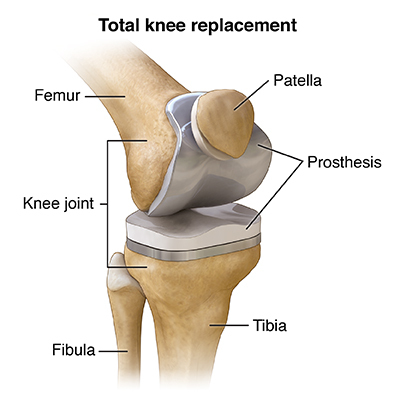
A knee replacement surgery involves the replacement of either a portion or the entire knee joint. This medical procedure falls under the category of arthroplasty, which pertains to joint replacements. During this surgery, a skilled surgeon will eliminate the impaired components of your original knee joint and substitute them with a synthetic joint, referred to as a prosthesis. This prosthesis is crafted from a combination of metal and plastic materials.
We are served since 12+ years to our patients with trust and we are happy.
12+
Years Of Experience
10000+
Patient Treated
2000+
Surgery Done
Types of knee replacement
There are several types of knee replacement surgeries, each designed to address specific needs and conditions. Here are some common types of knee replacement:
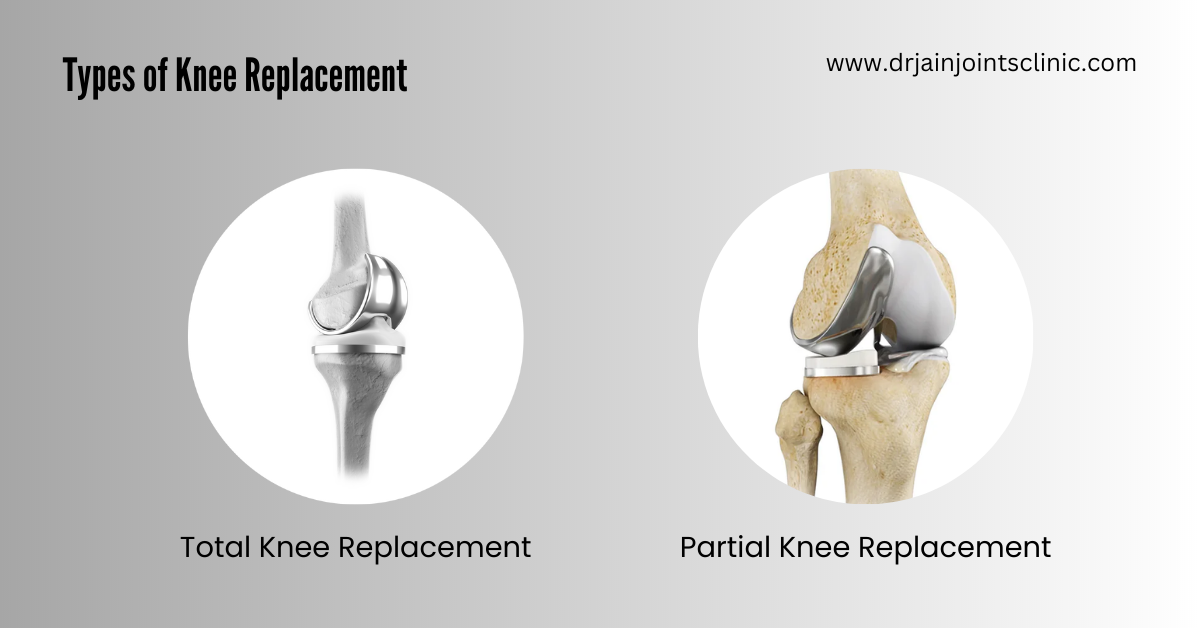
Total Knee Replacement (TKR): This is the most common type of knee replacement surgery. In a TKR, both the damaged surfaces of the thigh bone (femur) and shin bone (tibia) are replaced with artificial components. The underside of the kneecap (patella) may also be resurfaced or replaced.
Partial Knee Replacement (PKR): Also known as unicompartmental knee replacement, this procedure involves replacing only the damaged portion of the knee joint. It is suitable for patients with arthritis or damage limited to one compartment of the knee.
Complex or Revision Knee Replacement: This type of surgery is performed when a previous knee replacement has failed or complications have arisen. It involves removing the existing components and replacing them with new ones to address the issues.
It’s important to note that the choice of knee replacement type depends on factors such as the extent of knee damage, patient anatomy, age, activity level, and the surgeon’s recommendation. Your orthopedic surgeon will determine the most suitable type of knee replacement based on your individual needs and condition.
What conditions are treated with a knee replacement?
Knee replacement surgery, also known as knee arthroplasty, is typically performed to treat severe or debilitating conditions that cause significant pain, stiffness, and reduced mobility in the knee joint. Some of the conditions that may be treated with a knee replacement include:
Osteoarthritis: The most common reason for knee replacement, osteoarthritis is a degenerative joint disease that leads to the breakdown of the cartilage covering the ends of bones in the knee joint. This results in pain, swelling, and difficulty in movement.
Rheumatoid Arthritis: An autoimmune disease that causes inflammation and damage to the lining of the joints, including the knee. Over time, this can lead to joint destruction and deformity.
Post-Traumatic Arthritis:Arthritis that develops after a significant knee injury, such as a fracture or ligament tear, can lead to the deterioration of the joint surfaces and necessitate a knee replacement.
Osteonecrosis: A condition where the blood supply to the bone is disrupted, leading to bone death. This can cause the knee joint to deteriorate and result in the need for a replacement.
Ligamentous Instability: Severe damage or rupture of the ligaments in the knee can lead to instability and abnormal joint mechanics, which may eventually require a knee replacement.
Knee Deformities: Severe deformities or misalignments of the knee joint due to conditions like congenital disorders or previous surgeries may necessitate a replacement to restore proper function.
Failed Previous Surgeries: If a previous knee surgery, such as a partial knee replacement, has not provided satisfactory results or has led to complications, a total knee replacement or revision surgery may be considered.
It’s important to note that knee replacement surgery is typically considered after other conservative treatments, such as medication, physical therapy, and lifestyle changes, have not provided adequate relief. Your joint replacement surgeon in Jaipur will assess your specific condition and medical history to determine if knee replacement is the appropriate treatment option for you.
What are the benefits of knee replacement surgery?
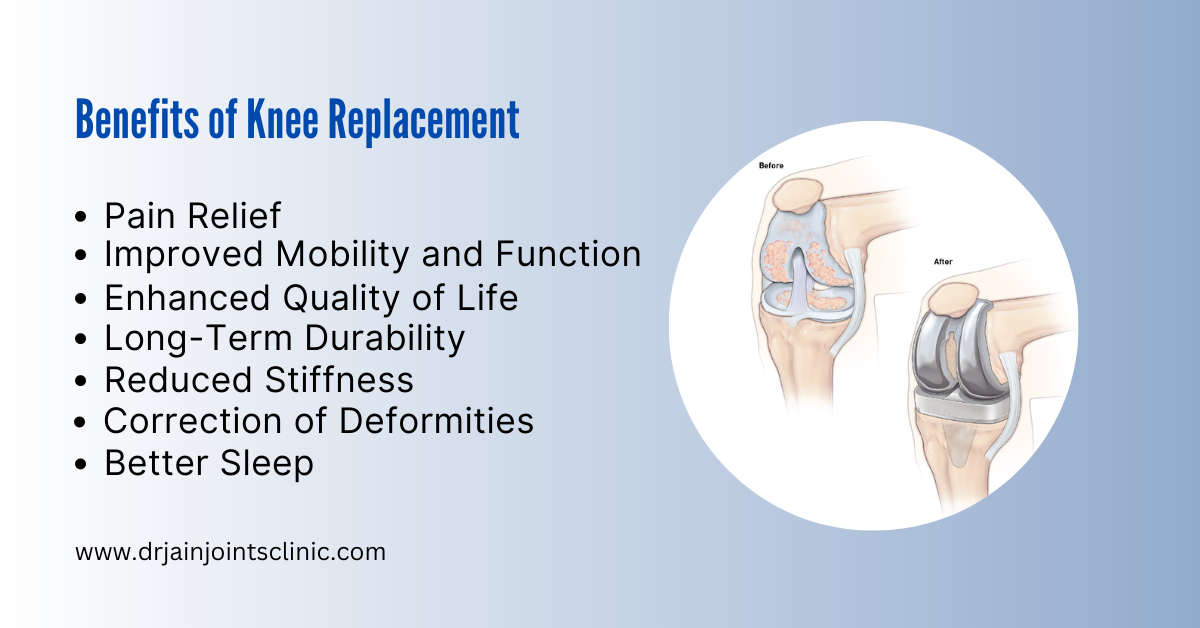
Knee replacement surgery, also known as knee arthroplasty, is a medical procedure designed to alleviate pain and improve function in individuals with severe knee joint damage. This surgery involves removing damaged or diseased portions of the knee joint and replacing them with artificial components. The benefits of knee replacement surgery include:
Pain Relief: One of the primary reasons for undergoing knee replacement surgery is to relieve chronic, debilitating knee pain caused by conditions like osteoarthritis, rheumatoid arthritis, or injury. The procedure can significantly reduce or eliminate pain, enhancing the overall quality of life.
Improved Mobility and Function: Knee replacement surgery can restore lost mobility and function in the knee joint. Patients often experience an increased range of motion, allowing them to perform daily activities, walk, climb stairs, and engage in recreational activities with greater ease.
Enhanced Quality of Life: By reducing pain and improving mobility, knee replacement surgery can lead to an improved overall quality of life. Patients can regain the ability to participate in activities they previously enjoyed and have a more active lifestyle.
Increased Independence: The improved mobility and function gained from knee replacement surgery can lead to increased independence. Patients may become less reliant on assistive devices, such as canes or walkers, and be better able to perform everyday tasks without assistance.
Long-Term Durability: Modern knee implants are designed to be durable and long-lasting. While the exact lifespan of an implant can vary depending on factors like patient age, activity level, and implant type, many patients experience relief from pain and improved function for 15 to 20 years or more.
Reduced Stiffness: Knee replacement surgery can help alleviate stiffness that often accompanies severe joint damage. This reduction in stiffness can lead to easier movement and improved joint comfort.
Correction of Deformities: For patients with significant deformities or misalignments of the knee joint, knee replacement surgery can correct these issues, helping to restore normal joint alignment.
Minimized Medication Dependence: After successful knee replacement surgery, patients may experience a reduced need for pain medications and anti-inflammatory drugs, which can have potential side effects and long-term health implications.
Better Sleep: Relief from chronic knee pain can lead to improved sleep quality, as patients are no longer kept awake or disturbed by joint discomfort.
How can I prepare for a knee replacement procedure?
Your joint replacement surgeon will provide you with specific instructions to prepare for the surgery. Generally, you will need to:
Undergo a thorough physical examination to ensure your overall health is suitable for the surgery.
Complete necessary blood tests.
Have an electrocardiogram (ECG) to assess your cardiac health.
Receive a dental evaluation to minimize the risk of post-surgery infections.
Undergo imaging tests, including a knee X-ray. Additional tests like magnetic resonance imaging (MRI) or computed tomography (CT) scans may also be required.
Inform your joint surgeon about all the medications and over-the-counter supplements you are currently taking. Some medications or supplements might need to be temporarily discontinued prior to the surgery.
Your surgeon will advise you on the timing for ceasing food and drink intake before the surgery. Generally, most individuals are required to refrain from eating or drinking for at least 12 hours before the surgical procedure.
What happens during a knee replacement procedure?
On the surgery day, anesthesia will be administered to ensure your comfort and eliminate pain sensation. An anesthesiologist will administer either general anesthesia, inducing sleep throughout the surgery, or regional anesthesia, numbing the area from your waist down.Throughout the knee replacement process, your surgeon will:
Remove damaged cartilage and bone.
Implant the artificial knee joint.
Introduce a plastic spacer that replicates the smooth cushioning of your original cartilage, which may have been damaged or removed.
Reshape your patella (kneecap) if necessary, to accommodate the new prosthetic knee joint.
How long does it take to recover from a knee replacement surgery in Jaipur?
The recovery time for a knee replacement surgery can vary widely depending on individual factors such as overall health, age, and the extent of the surgery. In general, here’s a rough timeline of what you might expect during the recovery process:
Hospital Stay: Most people stay in the hospital for 1 to 3 days after the surgery. During this time, you’ll receive pain management, physical therapy, and guidance on using assistive devices like crutches or a walker.
Initial Weeks: For the first few weeks after surgery, you’ll likely experience some discomfort and swelling. You’ll need to use crutches or a walker and may need assistance with daily activities. Physical therapy will be a crucial part of your routine to regain strength and mobility.
First Month: By the end of the first month, you may start transitioning from using assistive devices to walking independently. You’ll still need to be cautious and continue with physical therapy to improve your range of motion and strength.
2 to 3 Months: At this point, you should be able to walk without assistance and perform many everyday activities. However, complete recovery may still be ongoing, and you’ll likely continue with physical therapy to further enhance your knee function.
3 to 6 Months: By the third to sixth month, you might experience significant improvements in your knee’s strength and range of motion. Many individuals are able to return to light activities, work, and drive during this period.
6 to 12 Months: Full recovery can take up to a year or more. During this time, you’ll gradually regain strength and flexibility, and your knee should continue to improve. It’s important to follow your doctor’s and physical therapist’s guidance to ensure the best possible outcome.
Get Total Knee Replacement Surgery in Jaipur
Knee Replacement in Jaipur
Don’t let knee pain bother you any longer! Take the first step towards a pain-free and active life by booking an appointment with Dr. Rohan Jain, a highly skilled and experienced Knee Replacement Surgeon in Jaipur. With an impressive background in orthopedics including MBBS, MS (Ortho), DNB (Ortho), FJRS, and FIMS, Dr. Jain is a leading expert in Advanced Knee Replacement Surgery in Jaipur. Whether you’re dealing with arthritis, injury, or chronic discomfort, Dr. Jain’s expertise can provide you with the relief you deserve. Seize this opportunity to regain your mobility and vitality. Book your appointment today and embark on a journey to healthier and happier knees. Your active future awaits – take action now!
Book An Appointment
Dr. Rohan Jain (The best Joint Replacement Surgeon)
Looking for the top-rated joint replacement surgeon in Jaipur must book an appointment with Dr. Rohan Jain at Dr. Jain's Bone & Joint Clinic Jaipur.
Of all the orthopedic surgeons I visited for my mother, Dr. Jain turned out to be the most kind, knowledgeable and empathetic. My mother was suffering from arthritis for a long time and we were skeptical of the surgery. However, upon talking to Dr. Jain, we felt very comfortable going ahead with surgery as he responded to our queries patiently and chalked out the details clearly. His kind behavior with the patient and his knowledge make all the difference. I highly recommend him if you are looking for a really good orthopedic.
Shubha Jain
Dr. Rohan performed Knee Replacement surgery successfully on my mother and mother-in-law, both aged 75+. He was so patient and explained everything so well that put them at ease. We just had a wonderful experience with him. This was not an easy road to walk, but he made it easier for them.
Parimal Pareek
Awesome. I got operated on the knee joint as there was an excess of synovial fluid accumulated. Dr. Rohan was the one who operated on me. The best part was, during the whole process he was talking to me, helping me to overcome the fear of operation, as this was the first time I had been to an OT. Even post-OT care was ultimate. Surprisingly, time is no constraint for him if his patient has a problem. He picked up the phone at late night also when I was feeling some problems. Hats off to him and his team.
Naveen Meena
I am. happy about the service of Dr. Rohan Jain sir and sir treated like a son and answered of every question
Rajat Jain
I had pain in both knees and saw many doctors both in Jaipur and Delhi but the pain still continued for months. After seeing Dr. Rohan and consulting with him my pain has improved significantly. The best part is his way of making you feel comfortable, giving you honest consultation/advice, and listening to you to better understand your condition. Centrally located so it was easy for me to see him after work. I recommend him as someone who is here to serve the community with passion and not like others who just look to make money.
Knee replacement is generally considered a safe and effective surgery for patients suffering from severe arthritis or chronic knee pain. Modern techniques, experienced surgeons, and proper rehabilitation have improved recovery and success rates significantly. Many patients now choose “Knee Replacement in Jaipur” for advanced treatment, pain relief, and better long-term mobility outcomes.
There is no fixed ideal age for knee replacement, but most patients undergo the surgery between 50 and 70 years old when pain and mobility problems become severe. Doctors usually recommend it when medications, physiotherapy, and other treatments no longer provide effective relief.
Knee replacement surgery is generally safe, but like any major procedure, it carries some risks such as infection, blood clots, stiffness, or implant issues. However, with experienced surgeons, modern surgical techniques, and proper rehabilitation, most patients recover successfully and experience significant pain relief and improved mobility.
Knee replacement surgery is a procedure in which a damaged or worn-out knee joint is replaced with an artificial implant to reduce pain and improve movement. Many patients now prefer “Knee Replacement Surgery in Jaipur” for advanced treatment, experienced specialists, and better recovery support.
Knee replacement surgery can cause moderate pain during the first few days to weeks after the operation. However, this pain is well managed with medicines and gradually reduces with physiotherapy and healing. Most patients experience significant long-term pain relief and improved mobility after recovery.
Dr. Jain’s Bone & Joint Clinic offers accurate diagnoses and reliable treatments for a wide range of orthopedic conditions, including knee, hip, and shoulder joint pain. Book your appointment today at +91-9968730804.
Dr. Rohan Jain
MBBS, MS (Ortho), DNB ( Ortho), FJRS, FIMS Consultant Joint replacement, Arthroscopy (Sports Injury), and Trauma Surgery






 View All Review
